Nowadays, fuel prices, whether petrol or diesel are constantly rising. That’s why every car owner wants their vehicle to deliver good mileage.
However, many times it happens that the car does not give the mileage claimed by the company. In such cases, people often blame the manufacturer.
But the truth is, in many situations, the real reason behind low mileage lies in our own habits. These small but important factors are often ignored.
If you also feel that your car’s mileage has dropped, here are some commonly overlooked reasons you should know:
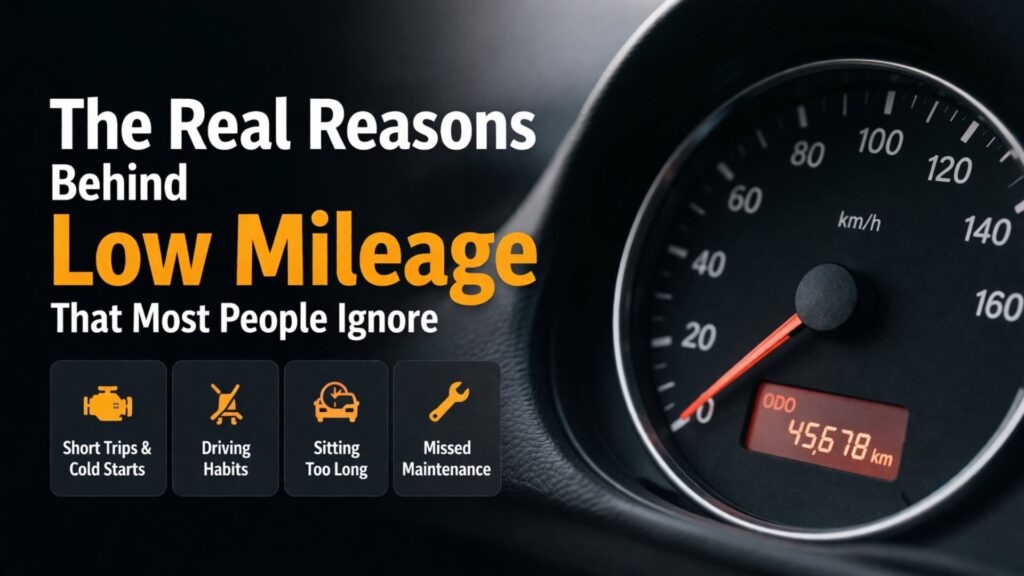
8 Common Reasons Behind Low Mileage That People Mostly Ignore:
1. Poor Driving Habits
Many drivers tend to accelerate aggressively. Frequent hard acceleration puts extra pressure on the engine, increasing fuel consumption.
For example, if you speed up suddenly at every traffic signal, your engine burns more fuel. Instead, smooth driving can significantly improve mileage. Experts also suggest maintaining a steady speed for better fuel efficiency.
2. Low Tyre Pressure
This is one of the most common mistakes people make. When tyre pressure is low, the engine has to work harder to move the car forward.
As a result, fuel consumption increases and mileage drops. According to auto experts, maintaining proper tyre pressure can improve mileage by 3–5%. So, it’s a good habit to check tyre pressure every 10–15 days.
3. Delayed Car Servicing
Many people service their car regularly at the beginning but start delaying it over time.
Old engine oil reduces engine efficiency, and a dirty air filter restricts airflow to the engine. Both these factors negatively impact mileage. Always follow the company’s recommended service schedule.
4. Carrying Unnecessary Weight
A lot of people keep extra, unnecessary items in their cars—like heavy tools, extra bags, or other सामान.
The heavier your car is, the harder the engine has to work, which directly affects mileage. Try to keep only essential items in your car.
5. Driving in the Wrong Gear
This issue is especially common among new drivers. Driving in a higher gear at low speed puts strain on the engine.
Similarly, driving at high speed in a lower gear also increases fuel consumption. Using the correct gear ensures smoother engine performance and better mileage.
6. Frequent Braking
In city driving, many people accelerate quickly and brake suddenly. This constant change in speed increases fuel consumption.
If you anticipate traffic and apply brakes smoothly, you can improve your car’s mileage.
7. Poor Quality Fuel
Sometimes, low mileage can also be caused by poor quality petrol or diesel. Impure fuel affects engine performance.
Always try to refuel from reliable and trusted fuel stations.
8. Excessive Use of AC
During summers, using the car’s AC is necessary. However, running the AC continuously at a high setting puts additional load on the engine.
This can slightly reduce mileage. It doesn’t mean you should stop using AC—just use it in a balanced and efficient way.
Is Company-Claimed Mileage Accurate?
It’s important to understand that the mileage claimed by car companies is tested under ideal conditions.
In real life, factors like traffic, road conditions, and driving style are different. That’s why actual mileage is usually lower than the claimed figures.
If your car is giving low mileage, it doesn’t always mean there is a major fault in the vehicle.
Often, small habits are the real reason like poor driving style, low tyre pressure, skipping servicing, or carrying extra weight.
By paying attention to these factors, you can significantly improve your car’s mileage.