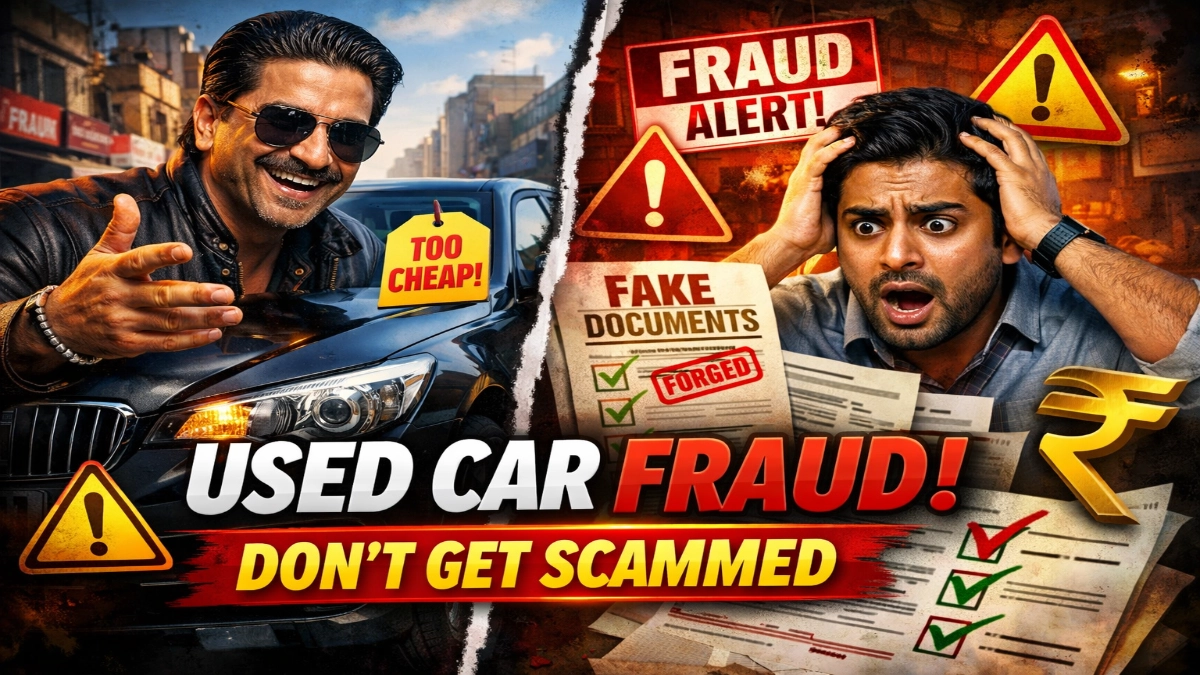
Buying a used car in India can save you a lot of money but it also comes with risks. From fake documents to hidden accident history, fraud in the second-hand car market is still very common across cities like Delhi NCR, Mumbai, Bangalore and even smaller towns.
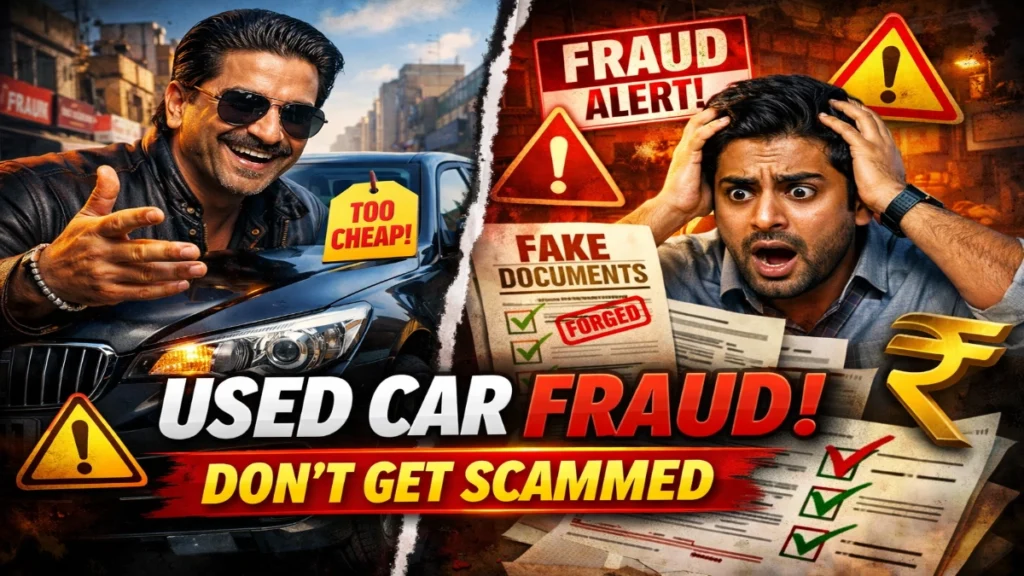
This guide is designed to give you trustworthy information so your purchase is safe, smart and scam-free.
Why Fraud Happens in India’s Used Car Market
The Indian pre-owned car market is largely unorganized. Many deals happen through local dealers, OLX listings or word-of-mouth.
Common Reasons:
- Lack of proper verification
- Cash transactions
- Fake RC and ownership documents
- Odometer manipulation
- Hidden accident or flood damage
According to market trends, Delhi NCR and Tier-2 cities report higher fraud complaints due to unverified sellers.
Quick Summary
How to avoid fraud while buying a used car in India?
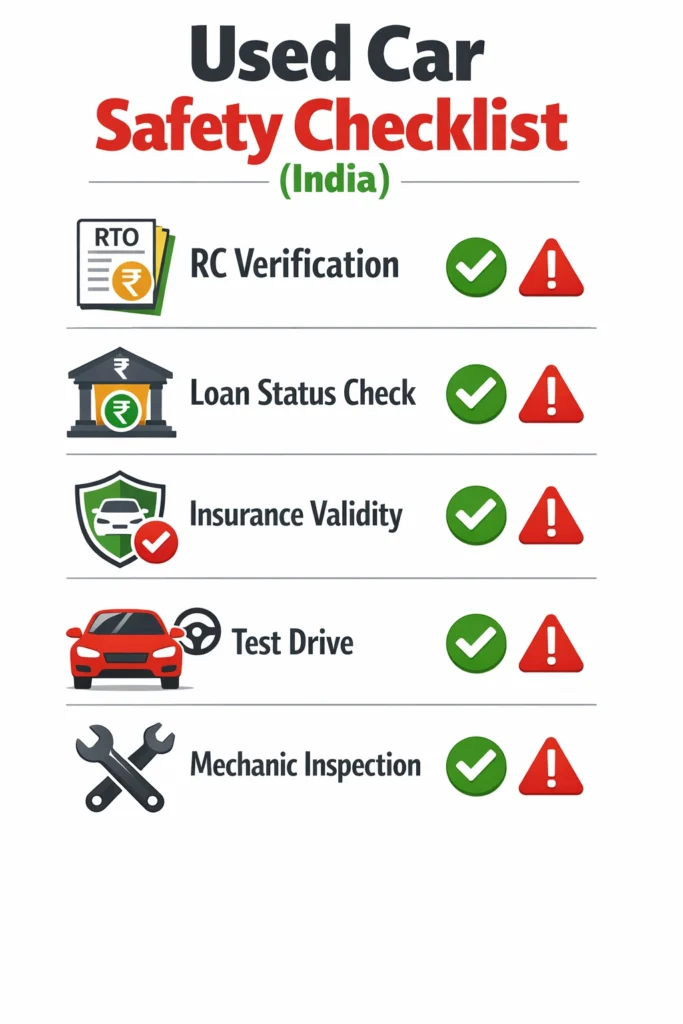
- Verify RC and chassis number
- Check loan (hypothecation) status
- Inspect car with a mechanic
- Verify vehicle history online (Parivahan)
- Avoid cash payments
- Ensure ownership transfer immediately
20 Proven Tips to Avoid Fraud While Buying Second-Hand Cars in India
1. Verify Seller Identity First
Always confirm:
- Aadhaar or PAN card
- Name matches RC
Avoid: Sellers claiming “I’m selling for my friend/relative.”
2. Check RC (Registration Certificate) Carefully
The RC is your car’s legal identity.
Verify:
- Owner name
- Engine & chassis number
- Registration date
- RTO details
Ensure details match the actual vehicle.
3. Check Hypothecation (Loan Status)
If the car has an active loan:
- Ask for bank NOC
- Confirm loan closure
Buying a car with unpaid loan = legal trouble.
4. Use Government Apps for Verification
Use:
- Parivahan Portal
- mParivahan App
You Can Check:
- Owner history
- Insurance
- RC validity
- PUC status
5. Watch Out for Odometer Fraud
Odometer rollback is very common in India.
Signs:
- Low mileage but worn interiors
- No service records
- Pedal wear inconsistent
6. Always Take a Test Drive
Drive the car yourself.
Check:
- Engine smoothness
- Brake response
- Steering control
- Gear shifting
7. Get Professional Inspection Done
Hire a mechanic or service expert.
Cost: ₹500–₹2000
Saves: ₹50,000+ in hidden repairs
8. Check Accident History
Look for:
- Repainted panels
- Uneven gaps
- Welding marks
Ask directly about past accidents.
9. Verify Insurance Records
Check:
- Validity
- Claim history
Multiple claims = risky vehicle.
10. Avoid Cash Deals
Use:
- UPI
- Bank transfer
- Demand draft
Always keep proof of payment.
11. Create a Sale Agreement
Include:
- Buyer & seller details
- Car details
- Final price
- Signatures
12. Transfer Ownership Immediately
RC transfer should be done within 30 days.
Delay = legal risk + fines
13. Check Pollution Certificate (PUC)
Mandatory for all vehicles in India.
14. Avoid “Too Cheap” Deals
If price is unusually low, it may be:
- Stolen car
- Flood-damaged
- Accident vehicle
15. Be Careful with Local Brokers
Not all brokers are trustworthy.
Red flags:
- No documents
- Pressure selling
- Fake urgency
16. Ask for Spare Keys
Missing keys = potential security risk.
17. Check Pending Challans
Use online portals to verify traffic fines.
18. Inspect Tyres & Battery
Extra cost often hidden.
Replacement cost:
- Tyres: ₹15,000+
- Battery: ₹5,000–₹10,000
19. Fill RTO Forms Properly
Important forms:
- Form 29
- Form 30
Form 29 & Form 30 Explained
When you buy a second-hand car in India, Form 29 and Form 30 are mandatory legal documents for transferring ownership. Many buyers ignore these or don’t fully understand them, this is where fraud often happens.
Let’s break them down:
What is Form 29? (Notice of Transfer)
Form 29 is a notification to the RTO that the vehicle has been sold.
Who Fills It?
- The seller (current owner) fills and signs it
- Buyer also signs it
What Information is Included:
- Vehicle registration number
- Engine & chassis number
- Seller’s details
- Buyer’s basic details
- Date of sale
Why It’s Important:
- It officially informs the RTO that the seller is no longer responsible
- Protects seller from future legal issues (accidents, challans, crimes)
Risk If Not Done:
If Form 29 is not submitted:
- Car is still legally in seller’s name
- Buyer may face ownership disputes
- Seller can misuse or report fraud
What is Form 30? (Application for Ownership Transfer)
Form 30 is a request to transfer ownership from seller to buyer.
Who Fills It?
- Both buyer and seller must fill and sign it
What Information is Included:
- Full details of buyer
- Full details of seller
- Vehicle details
- Sale agreement date
- Financing details (if any)
Why It’s Important:
- This is the actual ownership transfer document
- Without it, the car is NOT legally yours
Risk If Not Done:
- You cannot prove ownership
- Issues in resale
- Insurance claims may be rejected
- Legal complications in accidents
Form 29 vs Form 30 (Quick Comparison)
| Feature | Form 29 | Form 30 |
|---|---|---|
| Purpose | Inform RTO about sale | Transfer ownership |
| Filled by | Seller (with buyer sign) | Both buyer & seller |
| Role | Notification | Legal transfer |
| Mandatory | Yes | Yes |
Step-by-Step Process
Step 1:
Seller fills Form 29 → informs RTO about sale
Step 2:
Buyer + Seller fill Form 30 → request ownership transfer
Step 3:
Submit documents to RTO:
- RC copy
- Insurance copy
- PUC certificate
- ID & address proof
- Passport-size photos
Timeline You Must Follow
- Ownership transfer should be completed within 30 days
- Delay can result in penalty or legal issues
Common Mistakes Buyers Make
- Not checking if forms are actually submitted
- Signing blank forms (VERY risky)
- Not keeping copies
- Delaying RC transfer
20. Prefer Certified Used Cars
Safer option from authorized dealers.
Benefits:
- Warranty
- Verified history
- Better condition
Location-Based Tips
If You’re Buying in Delhi NCR / Noida / Ghaziabad:
- Check for flood-damaged cars (common after monsoon)
- Verify diesel vehicle restrictions (10-year rule)
In Mumbai / Coastal Cities:
- Watch for rust and water damage
In Bangalore / Hyderabad:
- Check IT employee resale cars (usually well-maintained)
In Tier-2 Cities:
- Be extra careful with local dealers and documentation fraud
Most Common Used Car Scams in India
- Fake RC papers
- Odometer rollback
- Stolen vehicles
- OLX advance payment scams
- Duplicate chassis numbers
Final Buyer Checklist
Before buying, ensure:
✔ RC verified
✔ Loan cleared
✔ Insurance valid
✔ No challans
✔ Test drive done
✔ Mechanic inspection completed
✔ Payment proof available
✔ RC transfer initiated
Pro Tips for 2026 Buyers
- Always compare prices on multiple platforms
- Record conversations with seller (for safety)
- Avoid emotional buying decisions
- Take your time, don’t rush
Expert Insight
India’s used car market is expected to grow rapidly in 2026, but fraud risks still exist, especially in unorganized segments.
The smartest buyers focus on documentation + verification + patience.
Buying a second-hand car in India can be a great decision, if done right.
The golden rules are simple:
✔ Verify everything
✔ Trust documents, not words
✔ Avoid shortcuts
✔ Never rush
By following these tips, you can confidently avoid fraud and make a safe purchase.
Frequently Asked Questions (FAQ’s)
Yes, if you verify documents, inspect the car and avoid cash deals.
Use the Parivahan portal to verify RC, owner details and insurance.
Odometer fraud, fake documents and hidden accident history.